
Event Venue Logistics Checklist
Booking a venue is the easy part. What separates a smooth event from a stressful one is everything that happens between signing the contract and welcoming your first guest, the logistics. An event venue logistics checklist gives you a clear path from initial planning to teardown, so nothing gets left to chance on the day itself.
Whether you're organizing a corporate meeting, a holiday party, a networking mixer, or a wedding rehearsal dinner in Wilmington, NC, the same core questions apply: How many people are coming? What can the venue provide, and what do you need to bring in? Who handles setup and breakdown? Where does everyone park?
At The Elia, we walk clients through these questions on every booking, and we've pulled our process into a checklist any event planner can use, whether you're hosting with us or somewhere else entirely.
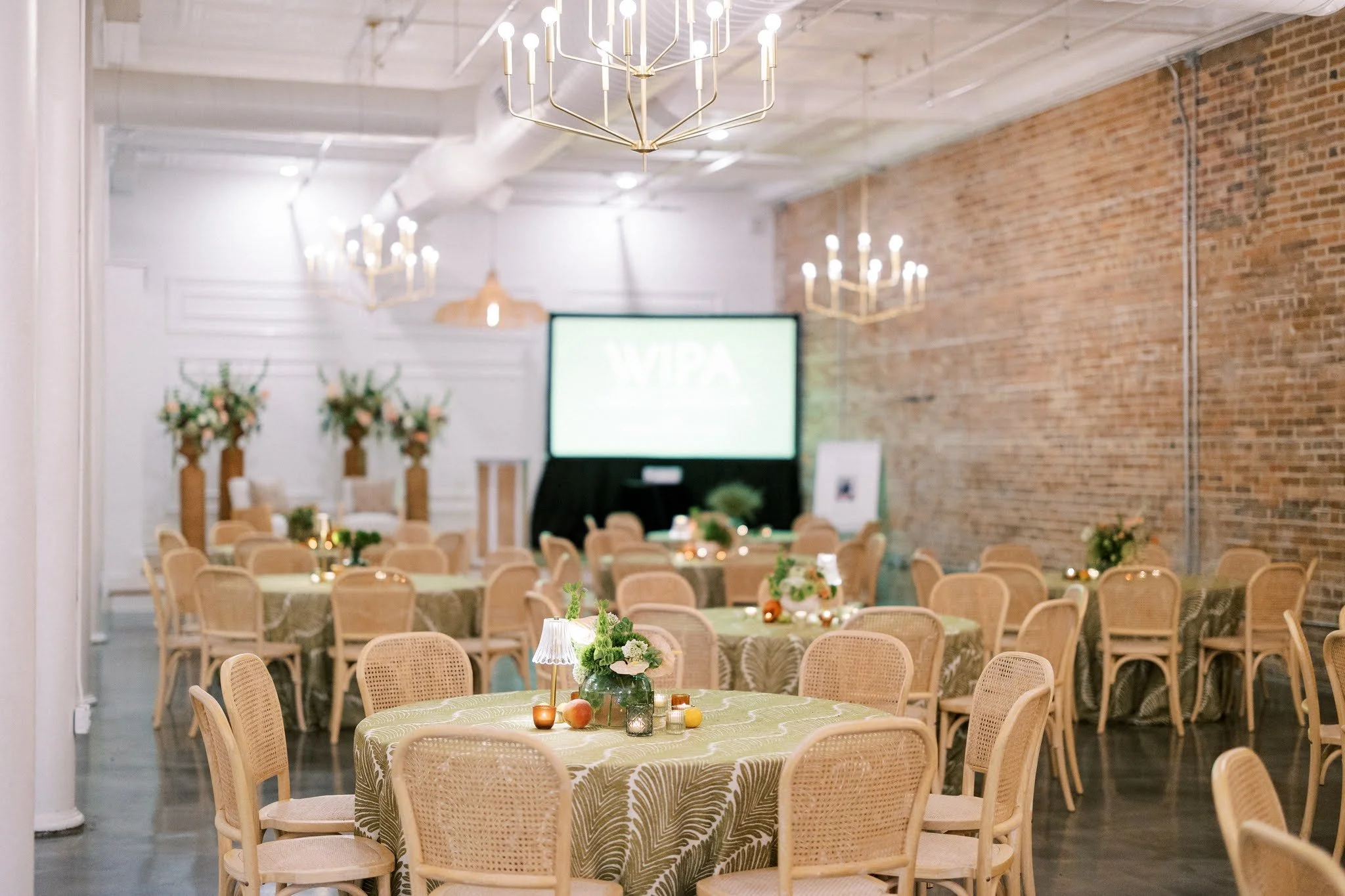
Start With Event Guest Count, Budget, Theme, and Purpose
Every other decision on your event venue checklist flows from three numbers and one sentence: how many guests, how much you can spend, and what the event is actually for.
Guest count drives almost everything. It determines how many tables, chairs, and place settings you need, how much catering to order, and whether a venue's square footage can hold your group comfortably. A room that feels open for 50 people can feel cramped at 150. Ask any venue to show you a sample floor plan for your exact guest count before you sign anything, not just a generic capacity number.
Budget planning works best when you rank your priorities instead of trying to spread money evenly across every category. Decide early whether the band, the bar package, or the florals matter most to you, and put your money there first. Choosing a venue that already includes tables, chairs, linens, and a venue manager on site (like The Elia's all-inclusive rentals) can free up budget for the parts of the event you care about most.
Purpose shapes tone and format. A corporate training session needs classroom seating and a reliable projector. A cocktail-style holiday party needs high-top tables and open floor space for mingling. A rehearsal dinner needs long banquet tables that encourage conversation. Write down your event's purpose in one sentence ahead of booking any vendor. It keeps every later decision, from theme to schedule, pointed in the same direction.
Questions worth answering before you request a proposal from any venue:
How many guests are you expecting, and how likely is that number to grow?
What's the one thing this event needs to accomplish?
Which budget category matters most: catering, bar, decor, or entertainment?
Does the space work for a seated dinner and a cocktail-style format, in case your plans shift?
Vet Your Event Vendors and Understand Venue Services
Once guest count, budget, and purpose are locked in, turn to the people and services that will actually run your event.
Start with the venue itself. Find out what's included in your rental and what you'll need to source separately. At The Elia, that means tables, chairs, linens, decor, and a venue manager on site for the full event. Other venues may charge extra for basics like setup and breakdown, so get this in writing.
Next, look into vendor policies. Some venues let you bring in any vendor you like, as long as they carry a certificate of insurance. Others, particularly around catering and alcohol, require you to choose from an exclusive list. The Elia works this way for catering and bar service, which keeps quality consistent but means you'll want to review the approved vendor list early in your planning, not two weeks before the event.
Registration and check-in are part of vendor coordination too, especially for corporate events or conferences with a formal guest list. Decide whether you need a physical sign-in table, a registration desk staffed by the venue, or a digital check-in tool. If you're expecting an exhibitor or sponsor presence, reserve table space and secure power access for their setup well ahead of time.
Finally, track every vendor's arrival window, load-in requirements, and point of contact in one shared document. When five or six different vendors are moving in and out of the same space on the same day, a simple schedule prevents overlap and confusion.
What to confirm with any vendor or venue before you commit:
Is a certificate of insurance required, and do you have one on file?
What's included in the rental price versus billed separately?
Who's your point of contact on event day?
What are the load-in and load-out windows for setup and breakdown?
Map the Event Floor Plan, Room Flow, and Technical AV Setup
Floor plans and flow decide whether guests move through your event comfortably or bump into each other at the bar. Think through this stage before you commit to a layout.
For a corporate meeting, classroom-style seating works for training sessions, while a U-shape suits smaller boardroom discussions. If you're bringing in a speaker or panel, check whether the venue has a built-in stage or platform so no one's seated with their back to the presentation. Round tables tend to work better than long rows for anything involving group discussion, since no one is stuck staring at the back of someone's head.
For a party or social event, think about how guests will move between the bar, the food, and any lounge or seating areas. A single big bar with food stations spread around the room usually keeps lines shorter than one central buffet. If your event calls for a specific design or theme, consider hiring a designer who can build the floor plan around your vision rather than working around a generic layout.
Technical needs deserve their own line item. Get a list of what AV equipment is already in the room, such as screens, microphones, and projectors, versus what you'll need to rent. If your event includes presentations, test the technical setup ahead of time rather than assuming it will work when your speaker arrives. Find out specifically who from the venue staff is on site to help troubleshoot on the day, since a slideshow that won't load five minutes before doors open is a problem no one wants to solve alone.
A quick reference for matching your event type to a layout and AV setup:
| Event Type | Recommended Layout | Typical AV Needs |
|---|---|---|
| Corporate training | Classroom-style rows | Projector, screen, microphone |
| Boardroom meeting | U-shape | Conference speaker, monitor |
| Panel or speaker session | Rounds facing a stage | Stage, microphone, presentation screen |
| Cocktail party | Open floor with high-tops | Ambient sound system |
| Plated dinner | Long banquet tables or rounds | Sound system, uplighting |
Plan Parking, Arrival, and Guest Logistics
Guests judge an event before they even walk through the door, based on how easy it was to park and find their way in.
If your venue is downtown or in a dense area, look for nearby parking lots or decks rather than assuming street parking will cover a group of 100 or more. The Elia sits in the heart of Downtown Wilmington, so we point guests to the River Place Parking Lot and the Water Street Parking Deck, both a short walk away, in addition to the ample street parking nearby.
For out-of-town guests, especially at weddings or multi-day events, share a short list of nearby hotels in your invitation or event app. A downtown venue within walking distance of hotels, restaurants, and nightlife makes the whole weekend easier for traveling guests, and it cuts down on the number of people who need a car at all.
Think through arrival flow at the venue itself: where guests enter, where they check coats or bags, and how they're directed toward registration, seating, or the bar. For larger events, a clear sign or a staff member at the door pointing people the right way solves most of the confusion before it starts.
Build a Production Schedule and Confirm Event Registration Details
A logistics checklist isn't complete without a schedule that spells out what happens, and when, for every person walking through the door.
Start with a production timeline: vendor load-in, sound check, rehearsal time for any speakers or entertainment, and a countdown to doors-open. For a conference or panel-driven event, map the gap between when participants arrive and when the program actually starts, since that's usually where lines and bottlenecks form. Build in a cushion for tech checks. AV problems rarely surface during setup, they tend to show up the moment a presentation is supposed to start.
Registration deserves its own line on the timeline too. Decide how attendees check in, whether that's a printed list, a digital scanner, or a staffed table, and how long that process realistically takes per person. A 200-guest event with a single registration table can back up fast if no one has planned for it.
Share the finished schedule with every vendor, not just your venue contact. When the caterer, the band, and the AV team are all working from the same production timeline, nobody is left guessing at cues once the event is underway.
Confirm Event Staffing, Setup, Teardown, and Backup Planning
The last stretch of your event logistics planning covers who's actually there on the day and what happens if something doesn't go as expected.
Confirm exactly who from the venue will be on site during your event, and whether that person handles setup, breakdown, or both. At The Elia, our venue manager oversees full setup and breakdown of all in-house inventory, so clients aren't scrambling to move tables once the last guest leaves. If your venue doesn't include this, factor extra vendor or staff time into your budget.
Look into rental time windows. Some venues charge separately for setup and teardown hours outside your main event block, which can catch planners off guard if they haven't asked upfront. Pin down your full rental window, including when vendors can start arriving and when everything needs to be cleared out.
Even indoor events benefit from a backup plan. A venue with an in-house planner or an experienced venue manager can often solve last-minute problems on the spot, which is one more reason to look into staffing support during your venue tour.
Backup questions worth answering before you finalize your booking:
What happens if a vendor cancels close to the date?
Is there a backup plan for AV or power failure?
How does the venue handle last-minute guest count changes?
Who makes the call if weather affects arrival or outdoor elements?
Post-event management is easy to forget once the party's over, but it matters. Nail down who's responsible for final payment, when it's due, and what the deposit and cancellation terms look like. Check whether the venue offers a walkthrough or debrief after the event so any damage, lost items, or billing questions get resolved quickly instead of dragging out over email.
Bringing Your Event Checklist to Life at The Elia
A good event venue logistics checklist turns a long list of unknowns into a short list of confirmed answers. Guest count, budget, and purpose set your direction. Vendor policies and venue services fill in the details. Floor plans and technical setup shape how guests experience the room. Parking and arrival logistics determine their first impression. A clear production schedule keeps every vendor moving in sync. Staffing, setup, and backup planning make sure the day runs the way you pictured it.
At The Elia, our team walks through this exact checklist with every client who books our 7,000-square-foot space in Downtown Wilmington, whether you're planning a corporate event, a holiday party, or a wedding-related celebration for up to 200 guests. If you're ready to put this checklist into action, inquire with our team and we'll help you plan every detail from first walkthrough to last dance.